Five Beeps From the Past: The Thrift-Store Voicemails Becoming an Accidental American Archive
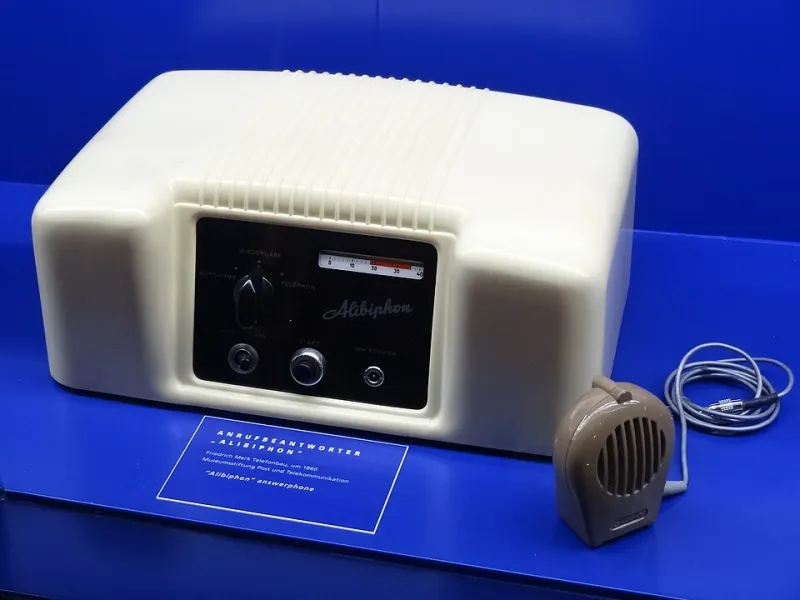
Photo: Cherubino, CC BY-SA 4.0, via Wikimedia Commons
Somewhere in America, a thrift-store answering machine is holding a stranger’s life in its microcassette. It might be a breakup, a birthday wish, a wrong-number job interview, or a grandmother declaring a new holiday. In 2026, a small but stubborn crew of digital curators is buying these machines, extracting the tapes, cleaning the audio, and posting the results online. The project has no central building and no gift shop. It has a beep, a hiss, and a growing reputation as one of the internet’s strangest accidental archives.
Welcome to the voicemail museum, or at least the idea of one. The curators are part preservationists, part scavengers, and part people who cannot resist a mystery. They find machines at Goodwill, estate sales, flea markets, and eBay listings that read like confessions: “Works, but old tape inside. Sold as-is.” Then they hit play.
The Museum With No Building (Only a Beep)
The appeal is not nostalgia for answering machines, exactly. Most of us do not miss the blinking red light or the feeling of dread when a machine says it has four new messages. The appeal is the accidental intimacy. A voicemail is unpolished by design. It catches people mid-thought, mid-sigh, mid-laugh. It records the sound of a kitchen, a dog barking, a TV in the background. It is the opposite of a curated social media post. It is a time capsule with bad audio quality.
In 2026, curators are increasingly careful about how they present these tapes. Names are bleeped. Phone numbers are scrubbed. Context is added only when it can be verified. Some recordings are posted with a warning. Others are kept offline because the curator decides the message is too raw, too sad, or too clearly meant for one person’s ears. The result is part archive, part found poetry, and part ethical minefield. The best curators know the difference between a charming accident and a private moment that should have stayed private.
The Countdown
5. The Breakup That Turned Into a Weather Report
A man calls to end a relationship, but he cannot quite get to the point. First he asks about her car. Then he mentions a sale on tires. Then, somehow, he delivers a detailed forecast for the next three days. “Anyway,” he says, “I think we should see other people. Also, Wednesday looks rainy.” The tape was found in a machine bought at an Ohio estate sale. The curator bleeped the names and left the weather in. It is funny because it is human. It is also a reminder that some people would rather talk about a cold front than a broken heart.
4. The Grandma Who Declared a New Holiday
This one is pure warmth. A grandmother leaves a message for her grandchildren announcing that she has invented “National Meatloaf Day” and that attendance is mandatory. She lists the sides. She warns against bringing store-bought gravy. She says she loves them. The recording is scratchy, but the affection cuts through. The curator says a family member recognized the voice and asked for the clip to stay online, minus the phone number. It is now one of the archive’s most shared recordings, partly because everyone has a grandmother who could have left it.
3. The Wrong-Number Job Interview
A caller believes he is leaving a message for a hiring manager. He is not. He is leaving a message for a dentist’s office in another state. He does not realize this. He explains that he is “not intimidated by spreadsheets,” that he “thrives in a fast-paced environment,” and that he once cried at a parade. The dentist’s office never called back. The machine did. The tape survives as a tiny monument to the pre-smartphone era, when a wrong number could become a five-minute monologue with no escape hatch.
2. The Little League Coach’s Accidental Pep Talk
A coach means to leave a message for his team. Instead, he reaches a roofing company. He does not notice. For two minutes, he talks about curveballs, hustle, and the importance of shaking off a bad inning. “Listen up, Tigers,” he says. “Life is going to throw you some wild pitches.” The roofing company kept the tape because it was too good to erase. Decades later, a curator cleaned it up and posted it with the coach’s name removed. It is funny, then unexpectedly moving, then funny again.
1. The Birthday Message From Beyond the Beep
This is the one that makes the comment section go quiet. A relative calls to wish a child happy birthday. The message is ordinary in the best way: a little off-key singing, a reminder to be good, a promise to see them soon. The tape was found in a machine that had been stored in a garage for years. The family was tracked down and gave permission to share it. The curator did not add music or a dramatic voiceover. The message does not need help. It is already a time capsule. It is also the strongest argument for why these tapes matter: not because they are viral, but because they are fragile.
The Ethics of Hitting Play
Here is the uncomfortable part. These messages were not recorded for us. They were recorded for one person, or one family, or one wrong number. Replaying them for strangers is a small act of trespass, even when the intention is preservation. Curators wrestle with this constantly. Some refuse to post anything with a full name. Others remove recordings when a family asks. A few have stopped buying machines altogether because they decided the ethical math did not work.
The best projects treat consent as an ongoing process, not a one-time checkbox. They bleep personal details. They avoid mocking the vulnerable. They acknowledge that a funny voicemail might also be someone’s worst day. And they accept that the internet’s memory is much longer than a microcassette. Once a tape is online, it can be copied, remixed, and reposted in ways no curator can control.
Why the Beeps Still Matter
In 2026, most of us communicate in texts that disappear into a blue bubble and emails that read like tiny legal documents. A voicemail is different. It has breath in it. It has hesitation. It has the sound of someone deciding what to say next. The thrift-store answering machines are not just retro curiosities. They are accidental time capsules of American life, full of regional accents, family dynamics, landline etiquette, and the strange poetry of a person talking to a machine because they cannot talk to a person.
So yes, the voicemail museum deserves a Pulitzer, or at least a very specific new category. Best Accidental Archive of Human Beeps. The tapes are fragile. The ethics are complicated. The messages are still worth hearing, as long as we remember that every beep belonged to someone first.