Twenty-Seven Shots and a Stamp: The Disposable Camera Being Mailed Across America One Stranger at a Time
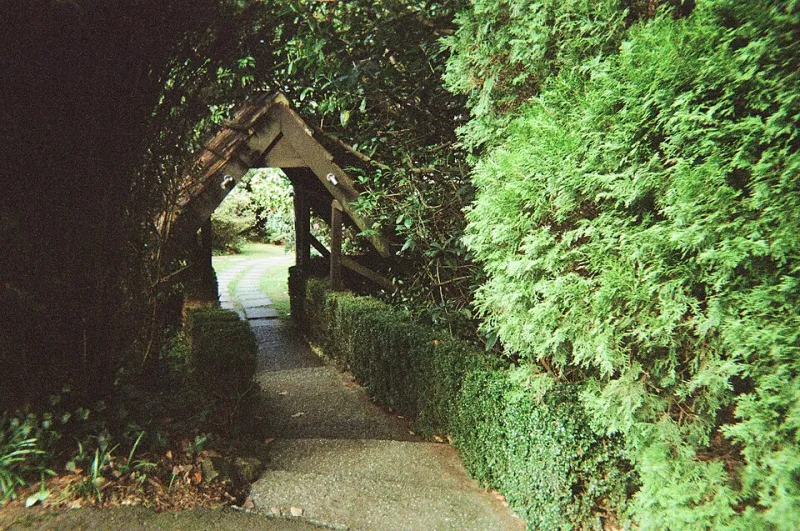
Photo: Matthew Paul Argall from Australia, CC BY 2.0, via Wikimedia Commons
There is a camera somewhere in America right now that nobody owns. It is a chunky yellow disposable, the kind you buy at a drugstore next to the sunscreen and the birthday cards, and it has been in the hands of roughly forty strangers since it started moving this spring. Each of them took exactly one picture. Then they put it in an envelope and mailed it to somebody they have never met.
The project has a name, a spreadsheet, and a waiting list. It also has a rulebook that reads like the terms of service for a very small, very analog country.
The Rules Are Simple and Absolutely Not Negotiable
The premise is almost aggressively unglamorous. A camera begins with a host. The host takes one photo, writes a short note in the log taped to the back, and ships it to the next name on the list. That person takes one photo, adds a line, and ships it onward. Twenty-seven exposures means twenty-seven people. Then the camera goes home, gets developed, and the whole roll gets scanned and posted for everyone who touched it.
The unwritten-but-heavily-enforced bylaws include: no more than forty-eight hours of custody, no removing the camera from its bubble mailer for anything less than a photo, no coordinating your shot with the person before or after you, and absolutely no peeking at the log beyond your own entry. One participant described the last rule as "the honor system, but with witnesses."
Why the urgency? Because a disposable camera is a single-use object with a fixed number of chances, and the whole appeal collapses if someone sits on it for three weeks. The spreadsheet has a column for "days held" that functions, in practice, as a public shaming device.
What People Are Actually Photographing
Here is the thing about handing a stranger one frame: they get weird about it. And weird, it turns out, is the entire point.
Scrolling the finished rolls from earlier cameras in the chain — there are four completed so far, with a fifth currently somewhere in the Midwest — you notice immediately that almost nobody takes a good photo. You get a lot of ceilings. You get a motel ice machine, lit like a crime scene. You get a close-up of a dog's nose so extreme it could be a weather map. You get a gas station at 3:07 a.m. with the fluorescent light doing something emotionally complicated to the pavement.
Then there are the frames that suggest a person panicked. One is a photograph of a thumb. Another is a photograph of the ground outside a post office, which the contributor labeled, with dignity, "the last thing I saw before I mailed it." One beloved entry is a birthday-hat-wearing cat who appears to be mid-yell. Another is a full-frame shot of a receipt, which — given how much of the internet is currently devoted to receipt archaeology — feels less like an accident and more like a reflex.
The best entries share a quality that professional photography rarely bothers with: they look like they were taken by someone who only had one shot and decided to spend it on something small.
The Logistics Are a Disaster and That's Half the Fun
The mail is not a gentle custodian of plastic objects. Cameras in this chain have been delayed by weather, rerouted through regional sorting facilities, and in one memorable case sat in a Tampa distribution center for eleven days while the group chat performed what can only be described as a group anxiety attack.
There is a tracking thread. There is a backup plan involving priority mail. There is a designated "camera shepherd" — a volunteer position with no authority and considerable stress — whose job is to gently nag people about postage. When one camera briefly went missing in June, the recovery effort involved three states, two Facebook groups, and a phone call to a very patient postal clerk who had never been asked to look for a specific disposable camera before.
It is, objectively, an absurd amount of labor for twenty-seven photographs that will mostly be bad. Participants seem aware of this. They keep doing it anyway.
Why a Generation With Infinite Storage Wants Twenty-Seven Chances
Ask anyone under thirty why they would bother with a film camera when their phone holds the Library of Congress, and you'll get a version of the same answer: because the phone holds the Library of Congress. Infinite storage means infinite retakes, which means every photo is a draft, which means nothing feels finished.
A disposable camera inverts all of that. There is no screen to check. There is no deleting. There is no second take, and there is no way to know whether you nailed it until the roll comes back weeks later. The wait is the product.
Then there's the stranger part. The chain letter format adds a low-stakes social contract that digital platforms struggle to replicate — you are not posting for an audience, you are handing the camera to a specific person and trusting them to keep going. Somewhere in the middle of the list, a person in Ohio takes a photo knowing that someone in Oregon will eventually see it and nobody else will ever fully understand it.
How to Get In (Or Start Your Own)
The project spreads the way these things always do: through a post that gets screenshot into a group chat, which gets forwarded into another group chat. New cameras are seeded by individual hosts rather than a central organization, which means there is no official signup, no customer service, and no guarantee anything will come back.
If you want to start one, veterans offer three pieces of advice. Ship with tracking. Tape the log to the outside, not inside, because people forget to put it back. And screen your list for enthusiasm rather than reach — a camera that moves through five cities in two weeks beats a camera that dies in someone's glove compartment.
The deeper lesson, though, is simpler than any rulebook. Twenty-seven exposures is not a limitation. It's a deadline. And apparently, America will mail a piece of plastic across the country just to feel one.