The Frozen-Food Frequency: Inside the Internet’s Hunt for America’s Lost Supermarket Muzak
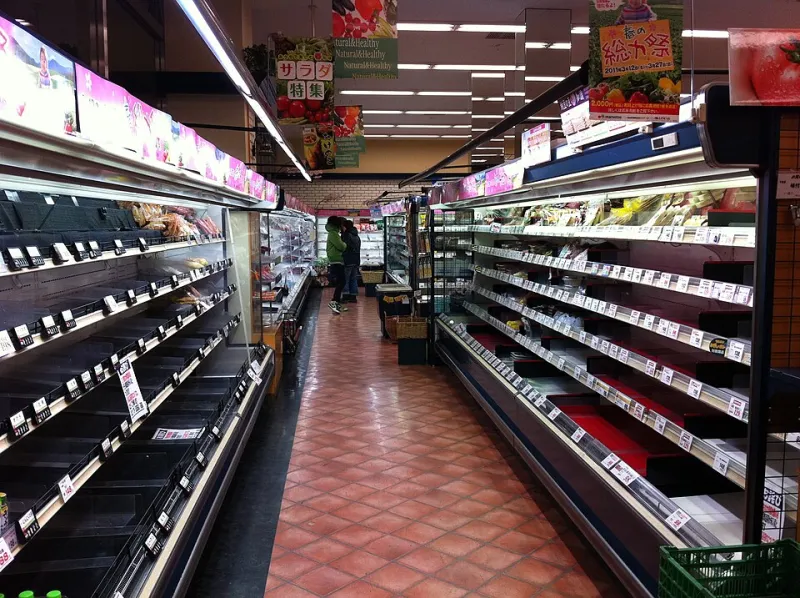
Photo: Koji Horaguchi, CC BY 2.0, via Wikimedia Commons
Somewhere in America, a person is standing very still near the dairy case with a phone held slightly above a shopping cart. They are not checking a list. They are not comparing yogurt prices. They are recording the ceiling speakers. This is not a crime scene, though it might look like one to a store manager. It is the work of a grocery-store muzak archivist, and in 2026, the hobby has quietly become one of the internet’s more obsessive rabbit holes.
The object of their attention is the background music that plays in supermarkets: the soft-rock deep cuts, the instrumental covers, the custom jingles, the strange little loops that seem designed to make a frozen pizza feel like a lifestyle. For decades, this music was treated as invisible plumbing. Now a small army of online sleuths is trying to identify it, catalog it, and save it from disappearing into the fluorescent ether.
A Shazam for the Cereal Aisle
The process is part detective work, part audio archaeology. A hunter records a snippet on a phone, often muffled by shopping carts and announcements about a cleanup on aisle seven. They upload it to a forum or Discord server. Other members listen, argue, suggest a track, and then someone finds a match on an obscure compilation or a licensing catalog. The easiest wins are recognizable soft-rock songs. The hardest are custom jingles and instrumental beds that may never have been released outside a store’s internal playlist.
Some archivists have developed a sixth sense for the telltale signs: a fade that sounds like it was edited for a five-minute loop, a vocalist who seems to be singing directly at a display of canned beans, a saxophone solo that arrives with the confidence of a store manager who has just discovered the intercom. They describe the thrill in terms usually reserved for birdwatchers. “I heard a version of a song I knew, but it was not the version I knew” is a sentence that has launched entire threads.
Why do stores cling to this stuff? The practical answers are licensing, habit, and atmosphere. Background music is supposed to fill space without demanding attention. It can make a store feel familiar, or at least less like a warehouse with a salad bar. Some chains use licensed services. Others use custom reels with jingles and announcements baked in. The result is a weird audio layer that is technically public but practically invisible, which is exactly the kind of thing the internet loves to archive.
The Aisle Tape Economy
The trading side of the hobby has its own vocabulary. People swap “aisle tapes,” a term that can mean an actual cassette, a digital folder, or a half-hour phone recording with the cart squeak left in. Some collectors specialize in regional chains. Others chase specific moods: produce-section soft jazz, deli-counter funk, late-night freezer-aisle balladry. A good find can circulate for years.
The trading-card analogy is not perfect, but it is close. There are common tracks, rare tracks, and the holy grails that may not exist. A clean recording of a custom jingle is like a rookie card. A complete in-store loop with no interruptions is like a sealed pack. A version of a familiar song that has been re-recorded by unknown session musicians is like a misprint. People will trade three decent grocery-store recordings for one really strange deli loop, and they will explain why in a comment thread that runs longer than the store’s operating hours.
Some of the archivists are retail workers who started paying attention during slow shifts. Some are retirees with a lifetime of soft-rock knowledge. Some are teenagers who discovered the whole thing through a video essay and now know more about licensed background music than they do about their own school schedule. The common thread is patience. You cannot Shazam a memory. You have to listen.
Why Muzak Never Really Died
The word “muzak” has become a joke about elevator music, but the actual history is more interesting. The Muzak company began in the 1930s and spent decades piping instrumental music into offices, factories, and stores. The goal was not art. It was atmosphere, and sometimes productivity. By the late twentieth century, the term had become shorthand for blandness, even as the underlying idea—carefully programmed background sound—became everywhere.
In 2026, the nostalgia is complicated. Some people hate supermarket music. Some people barely hear it. But for the archivists, it is a time capsule. A store’s playlist can reveal when it was updated, what licensing service it used, and what a regional chain thought its customers wanted to feel while buying paper towels. The music is not just background. It is a record of a business trying to create a mood.
That is also why the hobby has a preservationist streak. Stores change playlists. Chains merge. Old reels get thrown out. A jingle that played every twenty minutes for a decade can vanish in a single remodel. The archivists know this, and they operate with the quiet urgency of people who have seen a hard drive fail. They do not always succeed. But when they do, the result is a strange, specific slice of American life that would otherwise be lost.
The Holy Grail: A Clean Copy of the Deli Loop
Ask any aisle-tape collector about their white whale and you will get a different answer. For some, it is a clean copy of a custom jingle from a defunct regional chain. For others, it is a full recording of a store’s overnight playlist, complete with the announcement about the bakery closing in ten minutes. For one particularly patient archivist, it is a version of a soft-rock standard that seems to exist only in a supermarket in the Midwest, sung by someone who was never credited and probably never knew they would become a legend in a Discord server.
The hunt continues because the material is endless. Every town has a store. Every store has a speaker. Every speaker has a playlist that someone, somewhere, is trying to identify. In 2026, that is enough to keep a small army of listeners standing very still near the dairy case, phone raised, waiting for the next track to reveal itself. It is a weird way to spend an afternoon. It is also a reminder that the internet can turn almost anything into an archive—even the music you did not know you were hearing.