Operation Plush Freedom: Inside the Weekend Claw Machine Rescue Circuit
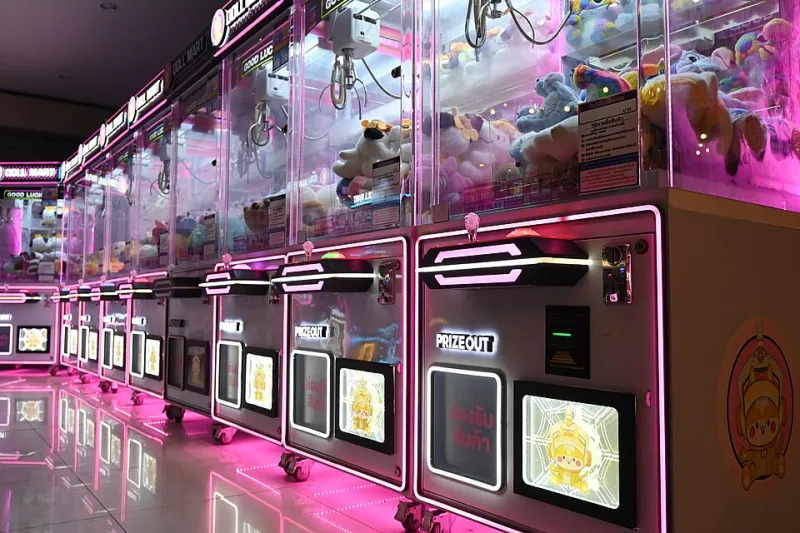
Photo: PattayaPatrol, CC BY-SA 4.0, via Wikimedia Commons
On a rainy Saturday in a laundromat outside Columbus, Ohio, a 34-year-old named Marcus is lying on his stomach, arm deep in the prize chute of a claw machine. He is not trying to win a plushie. He is trying to free one. The machine’s claw has clamped onto a capybara wearing a tiny bucket hat and then stalled, leaving the toy dangling over the chute like a piñata that has reconsidered its life choices. Marcus is part of a growing 2026 subculture: the claw machine rescue squad.
The Rescue Crews Are Not Here to Win
They are here to liberate. The squads—usually small groups of friends, sometimes organized through Discord servers with names like “Plush Liberation Front”—negotiate with arcade owners and laundromat managers, then perform what they call “surgical rescues.” The techniques are part physics, part theater: the gentle tilt, the double-tap, the gravity assist, the strategic second coin to reposition the claw. They livestream the whole thing. The wins are not measured in tickets. They are measured in freed toys and viewer cheers.
“We are not gamers,” says one organizer, a 29-year-old in Sacramento who goes by the handle ClawDad. “We are maintenance with a mission.” The mission is simple: if a toy is stuck, and the machine is not paying out, and the owner says it’s fine, then the crew will do what they can to reunite the plushie with the chute. The toy is the bonus. The rescue is the point.
How a Stuck Plushie Became a Community Project
Requests come in through social media. A machine in a bowling alley in Tulsa has a stuck unicorn. A laundromat in Sacramento has a plushie wedged against the glass. A pizza place in New Jersey has a claw that has been clutching the same frog for three months. The crews show up, often with headlamps and gloves, and ask permission first. The owners usually say yes. Sometimes they say yes because the stuck toy is bad for business. Sometimes they say yes because it is the most excitement the laundromat has seen since the change machine broke.
The videos do numbers because they are oddly satisfying: the tension, the wiggle, the plushie drop. It is “Ocean’s Eleven” for people who own too many tote bags. The comment sections are full of people offering advice, identifying the machine model, and asking for the address so they can “just check on it.” The community has its own vocabulary: “stuckage,” “claw lock,” “the shake,” “the wiggle,” “the plushie extraction.” It is a hobby with a lexicon, which is how you know it is real.
The Ethics of the Grab
Not everyone approves. Tinkering with machines can be a gray area. The community has a code: don’t break anything, don’t steal, don’t leave the machine worse than you found it. “Rescue, not vandalism” is the motto. Some crews carry their own toolkit—a wire hanger, a plastic spatula, a rubber mallet—but they insist the goal is to restore the machine, not to game it. They post receipts. They show the owner the footage. They put the machine back together. The toy is the bonus. The rescue is the point.
There is also a debate about whether a rescue is fair to the next player. If you free a toy that was stuck, you have changed the machine’s physics. Some crews leave a note. Some owners ask them to reset the prize pile. The best crews treat it like a public service: they fix the jam, they test the claw, they buy a few plays, and they leave the machine better than they found it. The worst crews are just guys with a hanger and a dream. The community polices itself, mostly by commenting “not cool” under the video.
Why This Hobby Is Booming in 2026
Arcades are having a moment. Laundromats are having a moment. And the internet loves a wholesome quest with a clear villain (the claw) and a clear hero (the person with a headlamp). The videos do numbers because they are oddly satisfying: the tension, the wiggle, the plushie drop. It is “Ocean’s Eleven” for people who own too many tote bags. The rescue circuit is also a reaction to the hyper-optimized internet. There is no algorithm here. There is a machine, a toy, and a person who wants to help. That is the whole plot.
The Plushie Economy
Rescued toys go to kids, to friends, to the crew’s own shelves. Some are donated. The crews keep spreadsheets. They name the toys. They post updates. The claw machine rescue squad is not solving a national crisis. It is solving a small, fuzzy one, one stuck capybara at a time. And in 2026, that might be exactly the kind of weird, wholesome hobby we need.